May 12, 2026
Role Model Blog: Reetta Lassila, ABB
“While technology evolves at high speed, the true pace of progress is determined by how quickly people can adapt.”
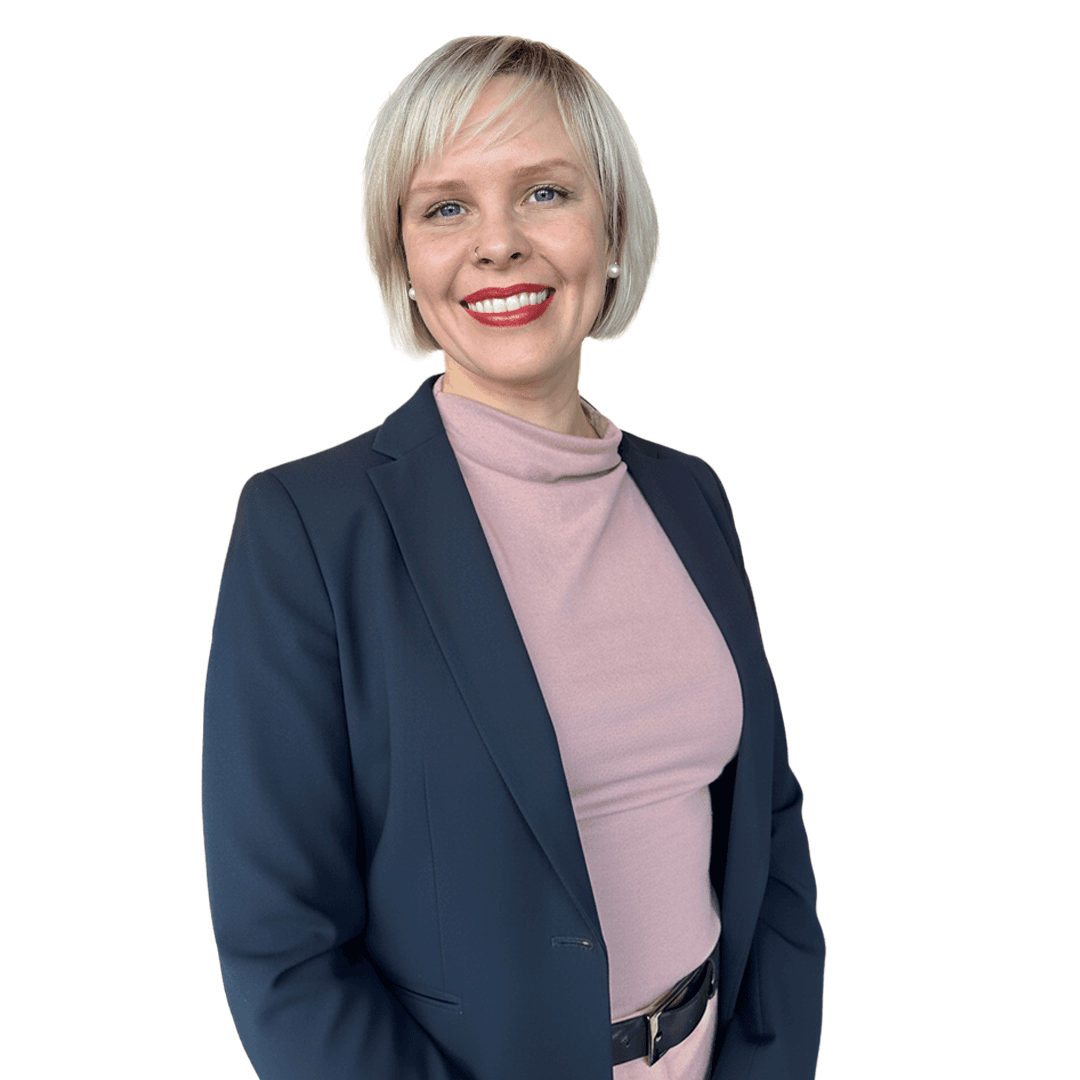
I am Reetta Lassila. I’m based in Finland and have been working at ABB for almost three years. I currently work as the Digital Operations Lead in ABB’s Motion High Power Division, where I lead digitalization and digital transformation initiatives across our manufacturing operations.
My responsibilities
In my role, I oversee the digital development of ten factories across three continents. When I talk about digitalization, I’m specifically referring to manufacturing and the digital transformation of smart factories and the strategy of it. This includes integrating operational technologies such as smart tools, robotics, and automated systems to improve production efficiency and product quality, and to get ready for future enablers such as increased usage of AI.
A large part of my work currently centers around leading a global Manufacturing Execution System (MES) program to develop and implement new global system to all factories. Together with my team, we ensure that our processes digital tool landscape truly support our core operations.
Working at ABB
ABB’s people are exceptional. You can clearly see that the company takes good care of its employees. They thrive in their roles and don't appear constrained or overstressed. The culture is welcoming, inclusive, and diverse. Another aspect that makes me proud to work at ABB is the company’s commitment to sustainability. In my division, Motion High Power, we contribute directly to solutions that support a more sustainable future.
How did I find my way to ABB?
Joining ABB was not just about applying for a job. It was about understanding my own motivations, researching the company carefully, building connections within the organization, and waiting for the right opportunity to appear. The most valuable tips I can offer for joining a large company like ABB are:
Define what you are looking for in an employer
I knew I wanted to work for a large international company with strong values. I focused on companies operating in Finland and Switzerland, partly because I hoped I might return to Switzerland and use German professionally.
Research your target companies thoroughly
As I explored different organizations, ABB kept appearing in my research. I then studied the company more closely: reading about its structure, understanding its business areas and divisions, and learning about the teams operating in Finland.
Use LinkedIn to understand the organization from the inside.
Through LinkedIn, I explored who worked there, the types of roles available, and how the organization was structured. This helped me see how my own background could fit within the company.
Speak with people before applying
Instead of immediately applying, I started reaching out to recruiters and hiring managers associated with roles aligned with my interests. My goal was simply to learn more about the company and its culture.
Wait for the right opportunity
Eventually, a position opened up that perfectly matched my background and interests. Because I had already spent time learning about the company and speaking with people inside it, I felt confident that it was the right fit.
Stay patient and persistent throughout the process
From the moment I started considering a career change to the moment I joined ABB, the journey took a year and a half. It required persistence, curiosity, and willingness to keep exploring the next step.
My opinion on AI
Every time a new wave of digital change appears, the reaction is often the same: people are terrified. Technology may move quickly, but the real pace of progress is not determined by technology alone, but by people. People are not robots and naturally need time to adapt. People need time to understand how new tools are, how they may improve or even positively change their work, and how humans and technology can collaborate effectively.
A certain level of caution around AI is actually healthy. The technology has enormous potential to improve both business operations and daily life. But if organizations adopt it too quickly without understanding how people will work with it, the results may not be as effective or even positive as expected.
I use AI as an assistant that helps simplify everyday tasks. One of the biggest advantages is speed. AI tools help me quickly gather information, summarize meetings, and extract insights from large volumes of internal material.
When working with complex topics or datasets, AI provides initial summaries, highlights patterns, or suggests perspectives for further exploration. I also treat AI as a conversation partner. It offers ideas that I actively challenge and refine.
How I Stay Ahead
In a world where change happens daily, sometimes even hourly, rather than relying only on formal learning, I actively engage with a diverse network of colleagues, experts, and professionals from different backgrounds. I pay attention to what people around me are focusing on, and when something comes up repeatedly, I start exploring it further.
From there, I deepen my understanding through articles, podcasts, and independent research. While I do follow industry news, it is often these personal exchanges that guide my learning journey and help me focus on what truly matters.
Beyond Work: What Shaped My Mindset
Outside of my professional role at ABB, my mindset has been shaped by a lifelong connection to sports, especially orienteering. At the end of the day, it’s about how you plan and prepare, train and how you execute.
This mindset I have carried over directly into my professional life. Orienteering taught me discipline, long-term thinking, and adaptability: how to make a plan, follow it, and adjust when things don’t go as expected. Just as importantly, it taught me to stay grounded and keep a sense of playfulness, even in demanding situations.
When reflecting on what has helped me succeed, three key qualities stand out. The first is persistence: I’ve fallen many times, but it’s about how quickly you get back up and continue.
The second and third, empathy and listening: growing up surrounded by diverse people and perspectives, I developed a strong ability to connect with others. This has become one of my most important strengths in leadership.
May 12, 2026
Role Model Blog: Reetta Lassila, ABB
“While technology evolves at high speed, the true pace of progress is determined by how quickly people can adapt.”
I am Reetta Lassila. I’m based in Finland and have been working at ABB for almost three years. I currently work as the Digital Operations Lead in ABB’s Motion High Power Division, where I lead digitalization and digital transformation initiatives across our manufacturing operations.
My responsibilities
In my role, I oversee the digital development of ten factories across three continents. When I talk about digitalization, I’m specifically referring to manufacturing and the digital transformation of smart factories and the strategy of it. This includes integrating operational technologies such as smart tools, robotics, and automated systems to improve production efficiency and product quality, and to get ready for future enablers such as increased usage of AI.
A large part of my work currently centers around leading a global Manufacturing Execution System (MES) program to develop and implement new global system to all factories. Together with my team, we ensure that our processes digital tool landscape truly support our core operations.
Working at ABB
ABB’s people are exceptional. You can clearly see that the company takes good care of its employees. They thrive in their roles and don't appear constrained or overstressed. The culture is welcoming, inclusive, and diverse. Another aspect that makes me proud to work at ABB is the company’s commitment to sustainability. In my division, Motion High Power, we contribute directly to solutions that support a more sustainable future.
How did I find my way to ABB?
Joining ABB was not just about applying for a job. It was about understanding my own motivations, researching the company carefully, building connections within the organization, and waiting for the right opportunity to appear. The most valuable tips I can offer for joining a large company like ABB are:
Define what you are looking for in an employer
I knew I wanted to work for a large international company with strong values. I focused on companies operating in Finland and Switzerland, partly because I hoped I might return to Switzerland and use German professionally.
Research your target companies thoroughly
As I explored different organizations, ABB kept appearing in my research. I then studied the company more closely: reading about its structure, understanding its business areas and divisions, and learning about the teams operating in Finland.
Use LinkedIn to understand the organization from the inside.
Through LinkedIn, I explored who worked there, the types of roles available, and how the organization was structured. This helped me see how my own background could fit within the company.
Speak with people before applying
Instead of immediately applying, I started reaching out to recruiters and hiring managers associated with roles aligned with my interests. My goal was simply to learn more about the company and its culture.
Wait for the right opportunity
Eventually, a position opened up that perfectly matched my background and interests. Because I had already spent time learning about the company and speaking with people inside it, I felt confident that it was the right fit.
Stay patient and persistent throughout the process
From the moment I started considering a career change to the moment I joined ABB, the journey took a year and a half. It required persistence, curiosity, and willingness to keep exploring the next step.
My opinion on AI
Every time a new wave of digital change appears, the reaction is often the same: people are terrified. Technology may move quickly, but the real pace of progress is not determined by technology alone, but by people. People are not robots and naturally need time to adapt. People need time to understand how new tools are, how they may improve or even positively change their work, and how humans and technology can collaborate effectively.
A certain level of caution around AI is actually healthy. The technology has enormous potential to improve both business operations and daily life. But if organizations adopt it too quickly without understanding how people will work with it, the results may not be as effective or even positive as expected.
I use AI as an assistant that helps simplify everyday tasks. One of the biggest advantages is speed. AI tools help me quickly gather information, summarize meetings, and extract insights from large volumes of internal material.
When working with complex topics or datasets, AI provides initial summaries, highlights patterns, or suggests perspectives for further exploration. I also treat AI as a conversation partner. It offers ideas that I actively challenge and refine.
How I Stay Ahead
In a world where change happens daily, sometimes even hourly, rather than relying only on formal learning, I actively engage with a diverse network of colleagues, experts, and professionals from different backgrounds. I pay attention to what people around me are focusing on, and when something comes up repeatedly, I start exploring it further.
From there, I deepen my understanding through articles, podcasts, and independent research. While I do follow industry news, it is often these personal exchanges that guide my learning journey and help me focus on what truly matters.
Beyond Work: What Shaped My Mindset
Outside of my professional role at ABB, my mindset has been shaped by a lifelong connection to sports, especially orienteering. At the end of the day, it’s about how you plan and prepare, train and how you execute.
This mindset I have carried over directly into my professional life. Orienteering taught me discipline, long-term thinking, and adaptability: how to make a plan, follow it, and adjust when things don’t go as expected. Just as importantly, it taught me to stay grounded and keep a sense of playfulness, even in demanding situations.
When reflecting on what has helped me succeed, three key qualities stand out. The first is persistence: I’ve fallen many times, but it’s about how quickly you get back up and continue.
The second and third, empathy and listening: growing up surrounded by diverse people and perspectives, I developed a strong ability to connect with others. This has become one of my most important strengths in leadership.
May 12, 2026
Role Model Blog: Reetta Lassila, ABB
“While technology evolves at high speed, the true pace of progress is determined by how quickly people can adapt.”
I am Reetta Lassila. I’m based in Finland and have been working at ABB for almost three years. I currently work as the Digital Operations Lead in ABB’s Motion High Power Division, where I lead digitalization and digital transformation initiatives across our manufacturing operations.
My responsibilities
In my role, I oversee the digital development of ten factories across three continents. When I talk about digitalization, I’m specifically referring to manufacturing and the digital transformation of smart factories and the strategy of it. This includes integrating operational technologies such as smart tools, robotics, and automated systems to improve production efficiency and product quality, and to get ready for future enablers such as increased usage of AI.
A large part of my work currently centers around leading a global Manufacturing Execution System (MES) program to develop and implement new global system to all factories. Together with my team, we ensure that our processes digital tool landscape truly support our core operations.
Working at ABB
ABB’s people are exceptional. You can clearly see that the company takes good care of its employees. They thrive in their roles and don't appear constrained or overstressed. The culture is welcoming, inclusive, and diverse. Another aspect that makes me proud to work at ABB is the company’s commitment to sustainability. In my division, Motion High Power, we contribute directly to solutions that support a more sustainable future.
How did I find my way to ABB?
Joining ABB was not just about applying for a job. It was about understanding my own motivations, researching the company carefully, building connections within the organization, and waiting for the right opportunity to appear. The most valuable tips I can offer for joining a large company like ABB are:
Define what you are looking for in an employer
I knew I wanted to work for a large international company with strong values. I focused on companies operating in Finland and Switzerland, partly because I hoped I might return to Switzerland and use German professionally.
Research your target companies thoroughly
As I explored different organizations, ABB kept appearing in my research. I then studied the company more closely: reading about its structure, understanding its business areas and divisions, and learning about the teams operating in Finland.
Use LinkedIn to understand the organization from the inside.
Through LinkedIn, I explored who worked there, the types of roles available, and how the organization was structured. This helped me see how my own background could fit within the company.
Speak with people before applying
Instead of immediately applying, I started reaching out to recruiters and hiring managers associated with roles aligned with my interests. My goal was simply to learn more about the company and its culture.
Wait for the right opportunity
Eventually, a position opened up that perfectly matched my background and interests. Because I had already spent time learning about the company and speaking with people inside it, I felt confident that it was the right fit.
Stay patient and persistent throughout the process
From the moment I started considering a career change to the moment I joined ABB, the journey took a year and a half. It required persistence, curiosity, and willingness to keep exploring the next step.
My opinion on AI
Every time a new wave of digital change appears, the reaction is often the same: people are terrified. Technology may move quickly, but the real pace of progress is not determined by technology alone, but by people. People are not robots and naturally need time to adapt. People need time to understand how new tools are, how they may improve or even positively change their work, and how humans and technology can collaborate effectively.
A certain level of caution around AI is actually healthy. The technology has enormous potential to improve both business operations and daily life. But if organizations adopt it too quickly without understanding how people will work with it, the results may not be as effective or even positive as expected.
I use AI as an assistant that helps simplify everyday tasks. One of the biggest advantages is speed. AI tools help me quickly gather information, summarize meetings, and extract insights from large volumes of internal material.
When working with complex topics or datasets, AI provides initial summaries, highlights patterns, or suggests perspectives for further exploration. I also treat AI as a conversation partner. It offers ideas that I actively challenge and refine.
How I Stay Ahead
In a world where change happens daily, sometimes even hourly, rather than relying only on formal learning, I actively engage with a diverse network of colleagues, experts, and professionals from different backgrounds. I pay attention to what people around me are focusing on, and when something comes up repeatedly, I start exploring it further.
From there, I deepen my understanding through articles, podcasts, and independent research. While I do follow industry news, it is often these personal exchanges that guide my learning journey and help me focus on what truly matters.
Beyond Work: What Shaped My Mindset
Outside of my professional role at ABB, my mindset has been shaped by a lifelong connection to sports, especially orienteering. At the end of the day, it’s about how you plan and prepare, train and how you execute.
This mindset I have carried over directly into my professional life. Orienteering taught me discipline, long-term thinking, and adaptability: how to make a plan, follow it, and adjust when things don’t go as expected. Just as importantly, it taught me to stay grounded and keep a sense of playfulness, even in demanding situations.
When reflecting on what has helped me succeed, three key qualities stand out. The first is persistence: I’ve fallen many times, but it’s about how quickly you get back up and continue.
The second and third, empathy and listening: growing up surrounded by diverse people and perspectives, I developed a strong ability to connect with others. This has become one of my most important strengths in leadership.