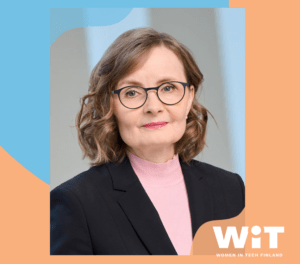
You cannot work something out just by working harder.
Following the passion and feeling included
As a teenager, I was a computer geek, and it was more nerdy than you might think: apart from playing games, I used Excel to create different graphs. I was a little scientist mesmerized by the possibilities the program offered. At first, I would occupy the computer in my parent’s room, and after one year my dad got tired of kicking me out so he just moved it to my room.
Following my keenness for computers, I quickly joined an after-school computer club where everyone else was boys. It scared me at first, but I figured my passion would make me stand out anyway so I stuck with the club. And looking back I am glad I did. This experience not only taught me more capabilities of the computer, like coding, but I also made lasting friends. Most importantly, it gave me the courage and the feeling of inclusion that set my mindset to always be myself and move forward confidently.
After graduating from the Finnish Lukio, I started my bachelor’s studies at the Tampere University of Applied Sciences. At that time, if you wanted to study Computer Science or Telecommunications like I wanted to, you had to study Electrical Engineering as the main subject. It was a little bit terrifying because I had to perform manual tasks I’d never done before but I moved forward with an open mind and eventually got interested in electronics.
Joining Nokia and finding support
A couple of years into my bachelor’s, I started my career as an intern at Nokia. After a few years working as a developer, I decided to proceed with a master’s degree at the same university, choosing a Telecommunications and Software Engineering major. It was quite challenging at times because I was also working full-time but I did graduate with a Master of Science degree.
My first role at Nokia was as a Software Engineering Trainee, doing some development work, which, again, was a bit intimidating at first because I dived into it from day one. We were renewing one of the systems and my job was to do a completely new part, so I would start my days with a cup of coffee and a thorough analysis of the ways things were done before. There was a lot of problem-solving involved, and I enjoyed it a lot, it was like cracking big puzzles. I also got to test the solutions I made, which was thrilling and exciting because I saw the fruits of my labor. The solutions we developed were used by the network operators and to this day I remember my first customer feedback. It was a problem report, where the person took time to explain in detail why my code didn’t work. It was a very valuable experience that made me realize what a huge difference there is between what I develop and what is required in a real system, and I have used this learning throughout my career to deliver the best solutions.
I started working on development at Nokia right off the bat and it was quite difficult. But I shared an office room with a good person who guided me through the job and helped me when I had the courage to ask for it. We tend to think that you need to know everything but naturally you can’t – coming from outside, how can you know? I made a pact with myself that I would ask for help but do it only once per topic, so I meticulously made notes of everything. The whole team was very supportive as everyone else had the same experience – joining a few years earlier they understood the beginning of the career can be difficult. I think it is very important to be able to rely on your colleagues and allow yourself not to know everything. And it’s also important to realize that no one is actually assuming that.
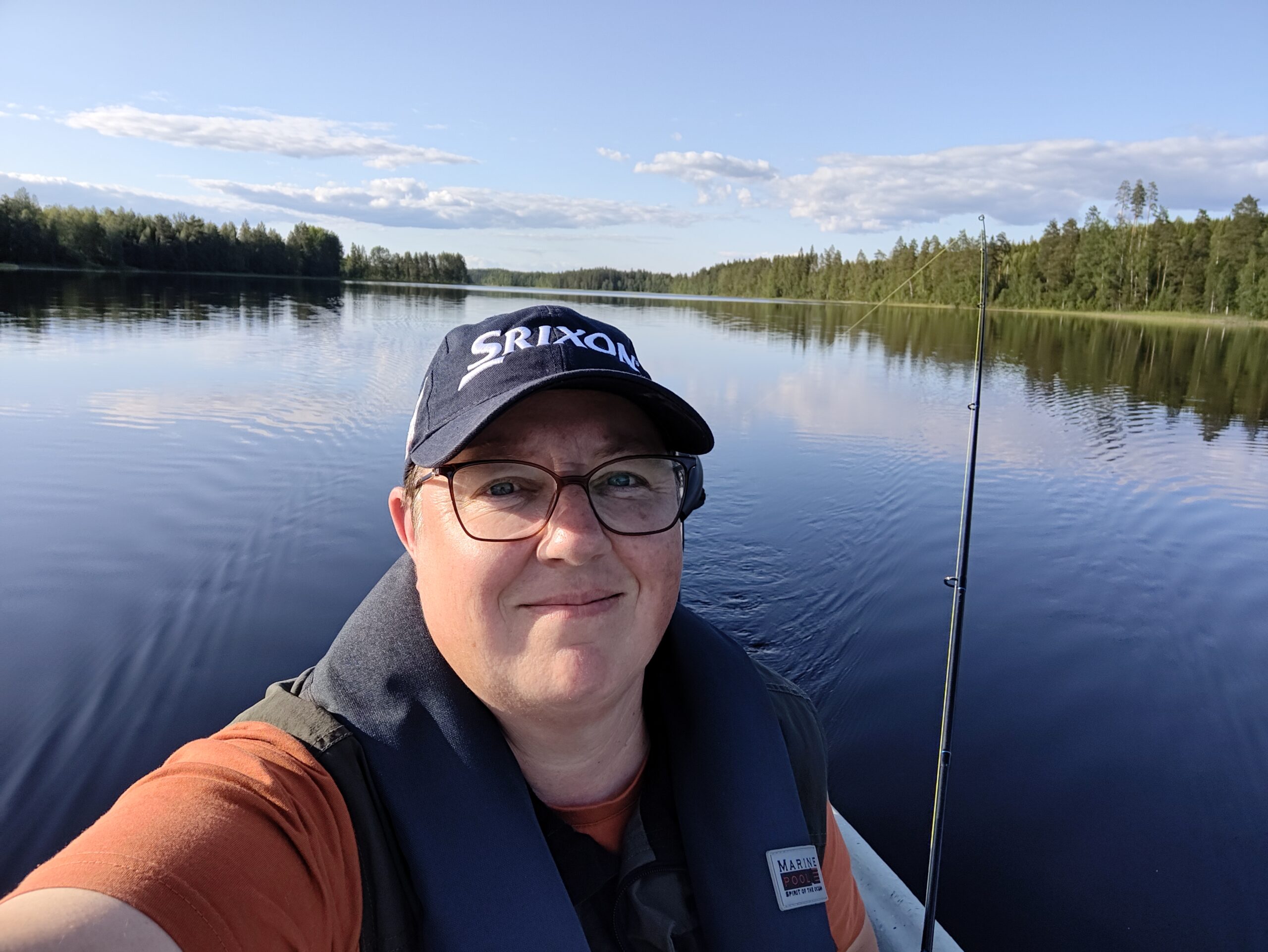
Miia Forssell, R&D Director, Nokia
Moving forward and cross-cultural communication
Being a responsible and target oriented person, I made sure that the things we were working on moved forward on time. This approach led to my promotion – I first became a leader of a small team, then became a Project Manager, and eventually a Program Manager. The role requires a lot of strategic thinking, and I love to plan ahead and focus on the essential parts. It is a strength of mine that I always think of options: plan A doesn’t work, it never does; then plan B also seldom works, but you cannot get stuck on that. And I realized that with the skilled people around, I can figure out other ways of moving through the bottlenecks.
One of the most remarkable projects that influenced my career and prepared me for my current role as the R&D Director revolved around a product area called Self Organizing Networks. Back then, Nokia acquired another company, and naturally, our products had to be merged and we got many new colleagues at once. It was a challenging and insightful process: how to join our forces to make the new product succeed on the market. It was a huge learning for me in terms of business operations, but most importantly, in terms of people management. I had to figure out how to establish new processes that hadn’t existed before and how to get the people on the same page. This experience helped me gain a new perspective on the consecutive projects as well.
In my current role as the R&D Director, I focus more on people topics. I have 20 nationalities on my team, it is very multicultural, and it teaches me and everyone else a lot about the interactions with each other. Even the way we perceive English varies if our mother tongues are different, and that can cause some misunderstandings. We may not be speaking about the same thing even if we are using the same words. That was a valuable realization for me as now, recognizing the differences in perception, it is less complicated to overcome the challenges within my team.
Many projects require the implementation of new technologies, and people can be resistant to that. My approach to overcoming that is to first identify the common ground so that everyone in my team knows what the customer wants and what is expected from us. Everyone inherently wants to do a good job and my goal is to define the good job and agree on that with the team. Once it is clear, people are more willing to take on changes as they understand why it is necessary. Change management is a difficult task in any place in the world but the common algorithm is to clarify why it is necessary to do so, build the understanding, and get more people involved in it. With my team, I dedicate a lot of time for the people to voice their opinions and concerns instead of just commanding them to do something in a certain way. There is, of course, a non-negotiable minimum that everyone agrees to but other than that I give people space to express themselves.
Challenges throughout the career
The hardships of my career usually stemmed from being under a lot of pressure to deliver a project or a product on time, a couple of times I couldn’t really sleep because of that. It took me some time to realize that it is a huge problem and I cannot go on like this or I will burn out. Reflecting on this experience, I learned to identify the warning signs and take care of my health no matter what the circumstances are. It’s not easy to handle everything on time but you need to figure out your ways, don’t let it eat you to the point where you cannot perform anymore.
What helps me is talking, I have great support networks, and when I talk about problems they become smaller. I know I’m not alone and my colleagues at Nokia are there to help me. Another thing that I do is keep boundaries – I always try to make time to log off from work and refresh my mind by walking outside or exercising, that way I get the best ideas. You cannot work something out just by working harder. Working smarter, and making time for your brain to relax, on the contrary, yields innovative ideas. I also encourage my team to take on this approach and get some space.
A day of the Head of R&D at Nokia
I typically start my days early because I love to read my emails quietly, and sometimes also have small talks with my colleagues who also come early. My day consists of many meetings, so every morning I check the schedule to make sure nothing has changed overnight. In the smaller meetings, like 1-on-1s, we usually discuss current matters and make some decisions. The bigger leadership meetings usually cover more strategic and quality topics. I try to be very mindful of my time and block slots to get things done beyond meetings.
My favorite part about the role is seeing people innovate: I get very excited when my colleagues show how they solved different problems, it is very refreshing and energizing. Connecting with others, seeing their enthusiasm about the job, and being able to help each other are the best things about my job.
Personal qualities
I am a quick learner and usually see the big picture and the key features of a project quite fast, and I believe these skills are very valuable in my position. Naturally, my background studies have helped me a lot in this role as, being an R&D Director, one needs to know what R&D is about. I’ve also learned about leadership a lot along the way, how to listen actively and be more patient, previously I could be a bit irritated if things weren’t moving forward fast enough. Staying calm when your mind is rushing is also a skill and I became quite good at it over time.
Nokia as a workplace
The first thing that comes to mind when I think about Nokia is innovation. There are many interesting things happening across different business units of the company, it amazes me. The engineer in me always thinks of how cool everything that I see is.
Diversity is another strength of Nokia. There has been a huge change in the company compared to when I just joined. People coming from different cultures and backgrounds have definitely been a great change for the better.
Last but not least, Nokia unites people: nobody can solve problems alone. While it is nice to work on your own products, we should avoid building silos, it’s better to talk to each other.
Encouraging more women to pursue tech
Looking back at my career and discussing the topic with others, I believe it is important to show examples to make the industry more appealing. It is the same with having a woman president: little girls are more likely to consider this as a career path. The same works with engineers, it is necessary to have role models from the field. Another crucial thing is to discuss the different roots that have taken women to the industry, I think we need to share these stories at schools, as there is not one path to tech.
What is more, it is important to continue the diversity conversations and make sure that we accommodate the needs of different people at any point in their careers.
Role models & favorites
I like reading the biographies of remarkable women with successful careers, for example, Jane Fonda or Gloria Steinem. It is interesting and uplifting to explore how they faced hardships in their industries that are not that welcoming to women, and how they overcame them and stood out. One of the most recent stories that comes to mind is Michelle Obama’s. I think we can draw great learnings from these, and make our own story easier in some way.
When it comes to favorites, I am a member of different groups, such as Program Management Institute or Technology Industries of Finland, and also Women in Tech, so I’m on many mailing lists. I usually participate in 1-3 events per month, the last one was about artificial intelligence and how to use that in development, and I enjoyed that very much.
I am also interested in cultural discussions because they resonate with my experience working in multicultural environments, especially in terms of learning language and how we perceive it differently.
Foreword
We are actively hiring people for Nokia and we would love to see more women applicants. If you are interested, I encourage you to apply, don’t think that you need to match a certain role 100%. Just go ahead, apply, and see how it works out for you. Be courageous and try to find your own way!