Aug 12, 2026
Role Model Blog: Jasmine Chopra, Fiskars
"Change is the only constant. Adaptability turns change into progress.”
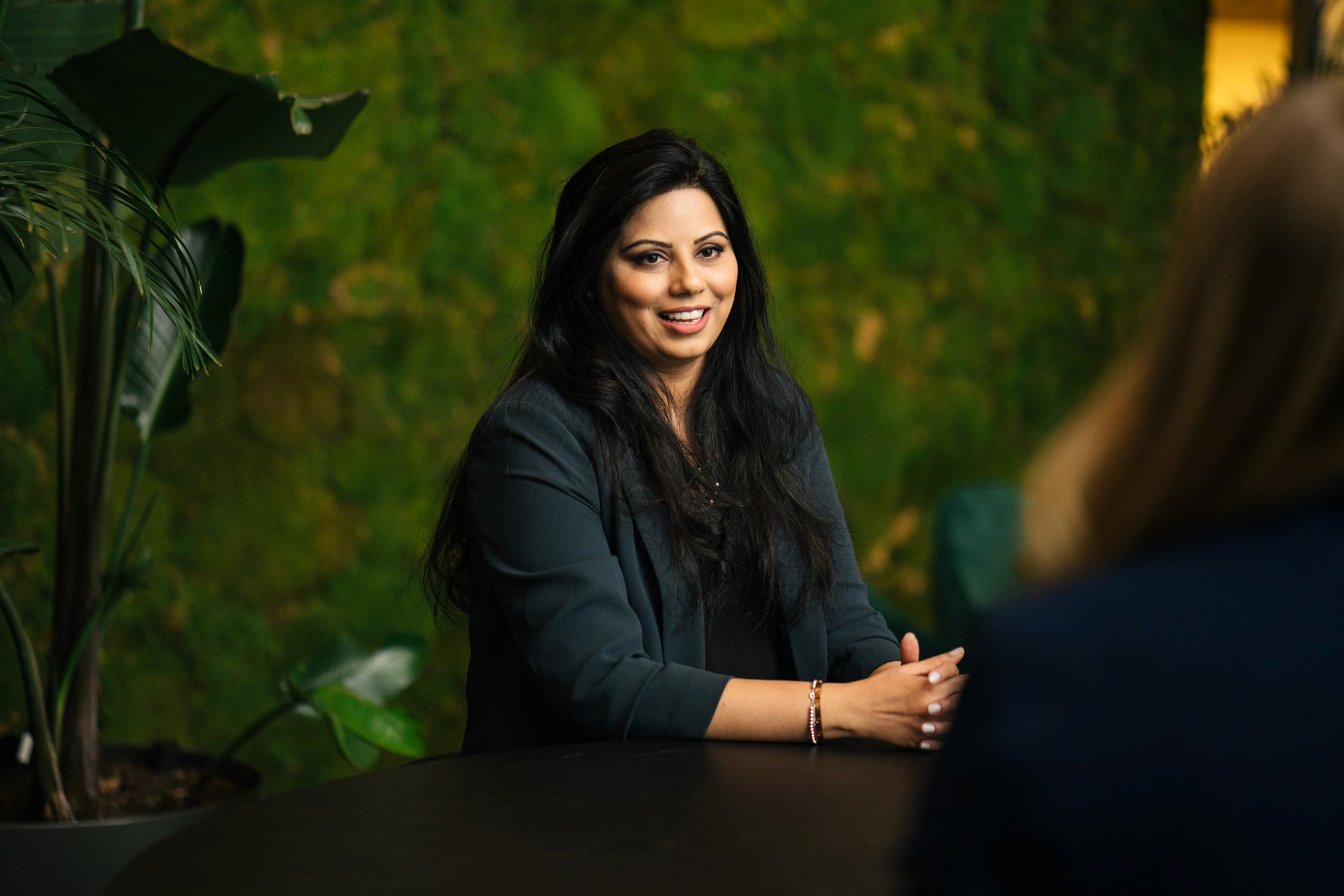
About Me
I'm Jasmine Chopra. I lead the Project Management Office at Fiskars R&D, based in Finland, though home has looked different in almost every chapter of my life. I grew up in India, studied economics and moved to Finland to start my career. Since then I've lived and worked in India, South Korea, China, and back in Finland again, often while raising a family alongside it. Outside of work, I'm drawn to music, art, travel and discovering new places. Those passions have taken me around the world, but one thing has remained constant: project management. It's the thread that has connected every country I've worked in and every industry I've been part of.
Leading a Global PMO
I lead a team of project managers in Fiskars R&D, responsible for bringing new products to market. Our role is to drive projects forward that turn ideas aligned with our strategic roadmap into products that reach consumers successfully. We work cross-functionally with product management, supply chain, sales, sourcing, and other key stakeholders, guiding initiatives through a structured stage-gate process that enables informed decisions, effective risk management, and strong execution. Every product has a defined launch timeline, and our responsibility is to ensure those commitments are met. For seasonal collections, timing is especially critical, as launch windows are fixed and cannot be recovered. At the same time, speed never comes at the expense of quality. We remain committed to delivering products that fulfill our promise on design, craftsmanship, customer experience and sustainability. Seeing something our teams have brought to life resonating with consumers is one of the most rewarding parts of what I do.
My Path Into Tech
My background is in economics rather than engineering. I studied international business, a path that first brought me to Finland, where I joined Nokia as a trainee. Project management wasn't part of a carefully mapped career plan, it was something I discovered along the way. I quickly realized that the role is fundamentally about people: bringing together diverse perspectives, aligning priorities, and enabling teams to achieve a shared objective.
What has kept me in the profession is its remarkable versatility. While every industry has its own products, technologies, and market dynamics, the principles of successful project delivery are universal. Whether I was managing projects in telecommunications at Nokia, leading complex B2B projects at Samsung in South Korea, or driving New Product Development at Fiskars, the core challenge remained the same: creating clarity, fostering collaboration, managing complexity, and helping people move confidently towards a common goal. That's what makes project management such a powerful and transferable discipline, it creates value regardless of the industry.
Early Career Lessons
One of the most valuable lessons I've learned has come from working across countries, cultures, and time zones. It has reinforced that successful project delivery isn't just about processes and plans but also about understanding people. Cultural differences shape how we communicate, make decisions, and build trust, and recognizing those nuances can have a direct impact on the outcome of a project.
Even today, I work with colleagues from around the world. Sometimes we don't even share the same language, yet we're united by a common objective. Building that alignment requires empathy, patience, and professionalism. It means listening with genuine curiosity, seeking to understand different perspectives, and resisting the urge to jump to conclusions. In my experience, investing the time to understand people is just as important as investing the time to understand the project itself.
The same mindset applies to failure. According to the Project Management Institute, only about two-thirds of projects fully achieve their original goals and business intent. The rest fall short in one way or another, often because projects are shaped by countless factors beyond any one team's control. Early in my career, I viewed those moments as setbacks. Over time, I came to see them differently. I believe there is such a thing as a successful failure. If a project doesn't go as planned but leaves the team with meaningful lessons that improve future decisions, processes, and outcomes, it has still created value. The goal isn't to avoid every setback—it's to learn from each one, adapt, and ensure the same mistake isn't repeated.
Working at Fiskars
I came to Fiskars as a user and an ardent admirer of the products first. Like most people in Finland, I'd used the iconic scissors for years, and from our sister brand Iittala too, and I was always impressed by the design and quality behind them. When the opportunity to join came up, I really wanted to be part of a company with that rich history, design and quality promise behind its products. I started as a project manager and grew from there into the role I have today.
Fiskars has 376 years of prestigious history, and that's not something I take lightly. What I value most is how the company holds onto that heritage while still pushing for innovation, design, and quality that hold up over time. One of our values is growing with compassion, and I think that's really important to everyone here. The people are the best part too. Everyone brings their best to the table, and the leadership gives us the guidance to back it up. Sustainability isn't an afterthought either. We're constantly looking for smarter materials and processes, even when the more sustainable choice is also the harder one.
The honest challenge is the parts we can't control. Global uncertainty affects our industry the way it affects most others, and no amount of planning removes that. What we can do is navigate around it and protect the outcome for the people who use our products.
Skills That Actually Matter in Project Management
If you asked me to name the skills that have mattered most, I wouldn't start with a technical one. I'd say patience, empathy, and listening closely. Project management, above all, is a communication discipline, so those aren't soft extras, they're the job itself. What I'd add on the harder side is a bias toward continuous upskilling. The tools and expectations around this role keep shifting, so standing still isn't really an option.
Staying Current
Most of my learning doesn't come from formal courses, it comes from paying attention. I listen carefully to the challenges people around me are facing, and then explore those topics through articles, professional communities, books, and ongoing learning around AI and digital transformation. I don't think professional growth can be traced back to a single course, podcast, or certification. What matters more is maintaining a mindset of continuous learning. The professionals who stay relevant are usually the ones who remain curious enough to keep asking questions and open enough to keep updating how they think and work. Adaptability turns change into progress.
Why AI Won't Replace Project Managers
There's a lot of discussion about whether AI will replace project managers. I don't see it that way. AI is already transforming how we work by helping us gather information, achieve efficiency and agility, summarize meetings, analyze data, and automate repetitive tasks. Those capabilities will only continue to improve.
What AI can't replace is human judgment. Project management is about navigating uncertainty, balancing competing priorities, building alignment among stakeholders, and making decisions when there isn't a perfect answer. It requires context, empathy, and accountability—qualities that remain fundamentally human.
I see AI as a powerful enabler rather than a replacement. By taking care of routine administrative work, it gives project managers more time to focus on driving projects forward, collaboration, problem-solving, and mitigating risks early. The real opportunity isn't to compete with AI, but to learn how to work alongside it. Those who embrace it and continue building their skills will be the ones who create the greatest value.
What Living in Four Countries Taught Me About Diversity
Living and working in four countries has reinforced one belief above all else: diversity makes teams stronger. It doesn't matter whether you're in consumer goods, technology, manufacturing, or any other industry, or whether you're working in Europe or Asia. Bringing together people with different backgrounds, experiences, and ways of thinking leads to better ideas, better decisions, and ultimately better outcomes.
Having worked across different cultures, I've seen firsthand that the strongest teams aren't the ones where everyone thinks alike—they're the ones where different perspectives are welcomed, challenged, and combined toward a common goal. Those conversations may take more effort, but they almost always lead to better solutions than a room full of people with the same viewpoint.
For me, diversity is far more than a people initiative; it's a business advantage. Organizations that embrace diverse perspectives are better equipped to innovate, adapt to change, understand their customers, and solve complex problems. Creating that kind of environment is a responsibility shared by everyone.
Life Outside Work
Outside of work, I enjoy the things that encourage me to slow down and see the world from different perspectives. Music has always been a big part of my life, and I'm currently studying classical music simply for the joy of learning. I also love baking, gardening, and traveling, as they remind me that the most meaningful results often come from curiosity, patience, and continuous growth.
I'm also an avid reader. About eighteen years ago, however, I found myself on the other side of the page and spent several years researching and writing a biography of my father, a renowned scientist who made pioneering contributions in his field. Writing the book became a way to preserve his legacy and ensure that future generations of our family would understand the impact of his work. It also left me with a lasting belief that every person has a story worth telling.
These days, I read far more than I write. One book that has stayed with me is Becoming by Michelle Obama. What resonates most isn't only the milestones she achieved, but also her message that growth is a continuous journey and that it's possible to evolve without losing sight of who you are.
Final Thoughts
“Growth begins the moment we're willing to step beyond what's familiar.”
A mentor shared those words with me early in my career at Nokia, and they've stayed with me ever since. Whenever I've been faced with a new country, a new role, or an unexpected challenge, they've reminded me that growth rarely happens within the boundaries of what's familiar.
Careers are rarely linear, and the most meaningful opportunities often arrive unannounced. What matters isn't just what you do, but how you approach it—with openness, resilience, and a willingness to keep learning. If you do that, growth isn't just possible; it's inevitable.
Change kept finding Jasmine and she kept meeting it head-on. If reading her story makes you think about your own next move, there's a community for that. You belong in tech. Every story shared opens a door. Join us. 💜


Aug 12, 2026
Role Model Blog: Jasmine Chopra, Fiskars
"Change is the only constant. Adaptability turns change into progress.”
About Me
I'm Jasmine Chopra. I lead the Project Management Office at Fiskars R&D, based in Finland, though home has looked different in almost every chapter of my life. I grew up in India, studied economics and moved to Finland to start my career. Since then I've lived and worked in India, South Korea, China, and back in Finland again, often while raising a family alongside it. Outside of work, I'm drawn to music, art, travel and discovering new places. Those passions have taken me around the world, but one thing has remained constant: project management. It's the thread that has connected every country I've worked in and every industry I've been part of.
Leading a Global PMO
I lead a team of project managers in Fiskars R&D, responsible for bringing new products to market. Our role is to drive projects forward that turn ideas aligned with our strategic roadmap into products that reach consumers successfully. We work cross-functionally with product management, supply chain, sales, sourcing, and other key stakeholders, guiding initiatives through a structured stage-gate process that enables informed decisions, effective risk management, and strong execution. Every product has a defined launch timeline, and our responsibility is to ensure those commitments are met. For seasonal collections, timing is especially critical, as launch windows are fixed and cannot be recovered. At the same time, speed never comes at the expense of quality. We remain committed to delivering products that fulfill our promise on design, craftsmanship, customer experience and sustainability. Seeing something our teams have brought to life resonating with consumers is one of the most rewarding parts of what I do.
My Path Into Tech
My background is in economics rather than engineering. I studied international business, a path that first brought me to Finland, where I joined Nokia as a trainee. Project management wasn't part of a carefully mapped career plan, it was something I discovered along the way. I quickly realized that the role is fundamentally about people: bringing together diverse perspectives, aligning priorities, and enabling teams to achieve a shared objective.
What has kept me in the profession is its remarkable versatility. While every industry has its own products, technologies, and market dynamics, the principles of successful project delivery are universal. Whether I was managing projects in telecommunications at Nokia, leading complex B2B projects at Samsung in South Korea, or driving New Product Development at Fiskars, the core challenge remained the same: creating clarity, fostering collaboration, managing complexity, and helping people move confidently towards a common goal. That's what makes project management such a powerful and transferable discipline, it creates value regardless of the industry.
Early Career Lessons
One of the most valuable lessons I've learned has come from working across countries, cultures, and time zones. It has reinforced that successful project delivery isn't just about processes and plans but also about understanding people. Cultural differences shape how we communicate, make decisions, and build trust, and recognizing those nuances can have a direct impact on the outcome of a project.
Even today, I work with colleagues from around the world. Sometimes we don't even share the same language, yet we're united by a common objective. Building that alignment requires empathy, patience, and professionalism. It means listening with genuine curiosity, seeking to understand different perspectives, and resisting the urge to jump to conclusions. In my experience, investing the time to understand people is just as important as investing the time to understand the project itself.
The same mindset applies to failure. According to the Project Management Institute, only about two-thirds of projects fully achieve their original goals and business intent. The rest fall short in one way or another, often because projects are shaped by countless factors beyond any one team's control. Early in my career, I viewed those moments as setbacks. Over time, I came to see them differently. I believe there is such a thing as a successful failure. If a project doesn't go as planned but leaves the team with meaningful lessons that improve future decisions, processes, and outcomes, it has still created value. The goal isn't to avoid every setback—it's to learn from each one, adapt, and ensure the same mistake isn't repeated.
Working at Fiskars
I came to Fiskars as a user and an ardent admirer of the products first. Like most people in Finland, I'd used the iconic scissors for years, and from our sister brand Iittala too, and I was always impressed by the design and quality behind them. When the opportunity to join came up, I really wanted to be part of a company with that rich history, design and quality promise behind its products. I started as a project manager and grew from there into the role I have today.
Fiskars has 376 years of prestigious history, and that's not something I take lightly. What I value most is how the company holds onto that heritage while still pushing for innovation, design, and quality that hold up over time. One of our values is growing with compassion, and I think that's really important to everyone here. The people are the best part too. Everyone brings their best to the table, and the leadership gives us the guidance to back it up. Sustainability isn't an afterthought either. We're constantly looking for smarter materials and processes, even when the more sustainable choice is also the harder one.
The honest challenge is the parts we can't control. Global uncertainty affects our industry the way it affects most others, and no amount of planning removes that. What we can do is navigate around it and protect the outcome for the people who use our products.
Skills That Actually Matter in Project Management
If you asked me to name the skills that have mattered most, I wouldn't start with a technical one. I'd say patience, empathy, and listening closely. Project management, above all, is a communication discipline, so those aren't soft extras, they're the job itself. What I'd add on the harder side is a bias toward continuous upskilling. The tools and expectations around this role keep shifting, so standing still isn't really an option.
Staying Current
Most of my learning doesn't come from formal courses, it comes from paying attention. I listen carefully to the challenges people around me are facing, and then explore those topics through articles, professional communities, books, and ongoing learning around AI and digital transformation. I don't think professional growth can be traced back to a single course, podcast, or certification. What matters more is maintaining a mindset of continuous learning. The professionals who stay relevant are usually the ones who remain curious enough to keep asking questions and open enough to keep updating how they think and work. Adaptability turns change into progress.
Why AI Won't Replace Project Managers
There's a lot of discussion about whether AI will replace project managers. I don't see it that way. AI is already transforming how we work by helping us gather information, achieve efficiency and agility, summarize meetings, analyze data, and automate repetitive tasks. Those capabilities will only continue to improve.
What AI can't replace is human judgment. Project management is about navigating uncertainty, balancing competing priorities, building alignment among stakeholders, and making decisions when there isn't a perfect answer. It requires context, empathy, and accountability—qualities that remain fundamentally human.
I see AI as a powerful enabler rather than a replacement. By taking care of routine administrative work, it gives project managers more time to focus on driving projects forward, collaboration, problem-solving, and mitigating risks early. The real opportunity isn't to compete with AI, but to learn how to work alongside it. Those who embrace it and continue building their skills will be the ones who create the greatest value.
What Living in Four Countries Taught Me About Diversity
Living and working in four countries has reinforced one belief above all else: diversity makes teams stronger. It doesn't matter whether you're in consumer goods, technology, manufacturing, or any other industry, or whether you're working in Europe or Asia. Bringing together people with different backgrounds, experiences, and ways of thinking leads to better ideas, better decisions, and ultimately better outcomes.
Having worked across different cultures, I've seen firsthand that the strongest teams aren't the ones where everyone thinks alike—they're the ones where different perspectives are welcomed, challenged, and combined toward a common goal. Those conversations may take more effort, but they almost always lead to better solutions than a room full of people with the same viewpoint.
For me, diversity is far more than a people initiative; it's a business advantage. Organizations that embrace diverse perspectives are better equipped to innovate, adapt to change, understand their customers, and solve complex problems. Creating that kind of environment is a responsibility shared by everyone.
Life Outside Work
Outside of work, I enjoy the things that encourage me to slow down and see the world from different perspectives. Music has always been a big part of my life, and I'm currently studying classical music simply for the joy of learning. I also love baking, gardening, and traveling, as they remind me that the most meaningful results often come from curiosity, patience, and continuous growth.
I'm also an avid reader. About eighteen years ago, however, I found myself on the other side of the page and spent several years researching and writing a biography of my father, a renowned scientist who made pioneering contributions in his field. Writing the book became a way to preserve his legacy and ensure that future generations of our family would understand the impact of his work. It also left me with a lasting belief that every person has a story worth telling.
These days, I read far more than I write. One book that has stayed with me is Becoming by Michelle Obama. What resonates most isn't only the milestones she achieved, but also her message that growth is a continuous journey and that it's possible to evolve without losing sight of who you are.
Final Thoughts
“Growth begins the moment we're willing to step beyond what's familiar.”
A mentor shared those words with me early in my career at Nokia, and they've stayed with me ever since. Whenever I've been faced with a new country, a new role, or an unexpected challenge, they've reminded me that growth rarely happens within the boundaries of what's familiar.
Careers are rarely linear, and the most meaningful opportunities often arrive unannounced. What matters isn't just what you do, but how you approach it—with openness, resilience, and a willingness to keep learning. If you do that, growth isn't just possible; it's inevitable.
Change kept finding Jasmine and she kept meeting it head-on. If reading her story makes you think about your own next move, there's a community for that. You belong in tech. Every story shared opens a door. Join us. 💜
Aug 12, 2026
Role Model Blog: Jasmine Chopra, Fiskars
"Change is the only constant. Adaptability turns change into progress.”
About Me
I'm Jasmine Chopra. I lead the Project Management Office at Fiskars R&D, based in Finland, though home has looked different in almost every chapter of my life. I grew up in India, studied economics and moved to Finland to start my career. Since then I've lived and worked in India, South Korea, China, and back in Finland again, often while raising a family alongside it. Outside of work, I'm drawn to music, art, travel and discovering new places. Those passions have taken me around the world, but one thing has remained constant: project management. It's the thread that has connected every country I've worked in and every industry I've been part of.
Leading a Global PMO
I lead a team of project managers in Fiskars R&D, responsible for bringing new products to market. Our role is to drive projects forward that turn ideas aligned with our strategic roadmap into products that reach consumers successfully. We work cross-functionally with product management, supply chain, sales, sourcing, and other key stakeholders, guiding initiatives through a structured stage-gate process that enables informed decisions, effective risk management, and strong execution. Every product has a defined launch timeline, and our responsibility is to ensure those commitments are met. For seasonal collections, timing is especially critical, as launch windows are fixed and cannot be recovered. At the same time, speed never comes at the expense of quality. We remain committed to delivering products that fulfill our promise on design, craftsmanship, customer experience and sustainability. Seeing something our teams have brought to life resonating with consumers is one of the most rewarding parts of what I do.
My Path Into Tech
My background is in economics rather than engineering. I studied international business, a path that first brought me to Finland, where I joined Nokia as a trainee. Project management wasn't part of a carefully mapped career plan, it was something I discovered along the way. I quickly realized that the role is fundamentally about people: bringing together diverse perspectives, aligning priorities, and enabling teams to achieve a shared objective.
What has kept me in the profession is its remarkable versatility. While every industry has its own products, technologies, and market dynamics, the principles of successful project delivery are universal. Whether I was managing projects in telecommunications at Nokia, leading complex B2B projects at Samsung in South Korea, or driving New Product Development at Fiskars, the core challenge remained the same: creating clarity, fostering collaboration, managing complexity, and helping people move confidently towards a common goal. That's what makes project management such a powerful and transferable discipline, it creates value regardless of the industry.
Early Career Lessons
One of the most valuable lessons I've learned has come from working across countries, cultures, and time zones. It has reinforced that successful project delivery isn't just about processes and plans but also about understanding people. Cultural differences shape how we communicate, make decisions, and build trust, and recognizing those nuances can have a direct impact on the outcome of a project.
Even today, I work with colleagues from around the world. Sometimes we don't even share the same language, yet we're united by a common objective. Building that alignment requires empathy, patience, and professionalism. It means listening with genuine curiosity, seeking to understand different perspectives, and resisting the urge to jump to conclusions. In my experience, investing the time to understand people is just as important as investing the time to understand the project itself.
The same mindset applies to failure. According to the Project Management Institute, only about two-thirds of projects fully achieve their original goals and business intent. The rest fall short in one way or another, often because projects are shaped by countless factors beyond any one team's control. Early in my career, I viewed those moments as setbacks. Over time, I came to see them differently. I believe there is such a thing as a successful failure. If a project doesn't go as planned but leaves the team with meaningful lessons that improve future decisions, processes, and outcomes, it has still created value. The goal isn't to avoid every setback—it's to learn from each one, adapt, and ensure the same mistake isn't repeated.
Working at Fiskars
I came to Fiskars as a user and an ardent admirer of the products first. Like most people in Finland, I'd used the iconic scissors for years, and from our sister brand Iittala too, and I was always impressed by the design and quality behind them. When the opportunity to join came up, I really wanted to be part of a company with that rich history, design and quality promise behind its products. I started as a project manager and grew from there into the role I have today.
Fiskars has 376 years of prestigious history, and that's not something I take lightly. What I value most is how the company holds onto that heritage while still pushing for innovation, design, and quality that hold up over time. One of our values is growing with compassion, and I think that's really important to everyone here. The people are the best part too. Everyone brings their best to the table, and the leadership gives us the guidance to back it up. Sustainability isn't an afterthought either. We're constantly looking for smarter materials and processes, even when the more sustainable choice is also the harder one.
The honest challenge is the parts we can't control. Global uncertainty affects our industry the way it affects most others, and no amount of planning removes that. What we can do is navigate around it and protect the outcome for the people who use our products.
Skills That Actually Matter in Project Management
If you asked me to name the skills that have mattered most, I wouldn't start with a technical one. I'd say patience, empathy, and listening closely. Project management, above all, is a communication discipline, so those aren't soft extras, they're the job itself. What I'd add on the harder side is a bias toward continuous upskilling. The tools and expectations around this role keep shifting, so standing still isn't really an option.
Staying Current
Most of my learning doesn't come from formal courses, it comes from paying attention. I listen carefully to the challenges people around me are facing, and then explore those topics through articles, professional communities, books, and ongoing learning around AI and digital transformation. I don't think professional growth can be traced back to a single course, podcast, or certification. What matters more is maintaining a mindset of continuous learning. The professionals who stay relevant are usually the ones who remain curious enough to keep asking questions and open enough to keep updating how they think and work. Adaptability turns change into progress.
Why AI Won't Replace Project Managers
There's a lot of discussion about whether AI will replace project managers. I don't see it that way. AI is already transforming how we work by helping us gather information, achieve efficiency and agility, summarize meetings, analyze data, and automate repetitive tasks. Those capabilities will only continue to improve.
What AI can't replace is human judgment. Project management is about navigating uncertainty, balancing competing priorities, building alignment among stakeholders, and making decisions when there isn't a perfect answer. It requires context, empathy, and accountability—qualities that remain fundamentally human.
I see AI as a powerful enabler rather than a replacement. By taking care of routine administrative work, it gives project managers more time to focus on driving projects forward, collaboration, problem-solving, and mitigating risks early. The real opportunity isn't to compete with AI, but to learn how to work alongside it. Those who embrace it and continue building their skills will be the ones who create the greatest value.
What Living in Four Countries Taught Me About Diversity
Living and working in four countries has reinforced one belief above all else: diversity makes teams stronger. It doesn't matter whether you're in consumer goods, technology, manufacturing, or any other industry, or whether you're working in Europe or Asia. Bringing together people with different backgrounds, experiences, and ways of thinking leads to better ideas, better decisions, and ultimately better outcomes.
Having worked across different cultures, I've seen firsthand that the strongest teams aren't the ones where everyone thinks alike—they're the ones where different perspectives are welcomed, challenged, and combined toward a common goal. Those conversations may take more effort, but they almost always lead to better solutions than a room full of people with the same viewpoint.
For me, diversity is far more than a people initiative; it's a business advantage. Organizations that embrace diverse perspectives are better equipped to innovate, adapt to change, understand their customers, and solve complex problems. Creating that kind of environment is a responsibility shared by everyone.
Life Outside Work
Outside of work, I enjoy the things that encourage me to slow down and see the world from different perspectives. Music has always been a big part of my life, and I'm currently studying classical music simply for the joy of learning. I also love baking, gardening, and traveling, as they remind me that the most meaningful results often come from curiosity, patience, and continuous growth.
I'm also an avid reader. About eighteen years ago, however, I found myself on the other side of the page and spent several years researching and writing a biography of my father, a renowned scientist who made pioneering contributions in his field. Writing the book became a way to preserve his legacy and ensure that future generations of our family would understand the impact of his work. It also left me with a lasting belief that every person has a story worth telling.
These days, I read far more than I write. One book that has stayed with me is Becoming by Michelle Obama. What resonates most isn't only the milestones she achieved, but also her message that growth is a continuous journey and that it's possible to evolve without losing sight of who you are.
Final Thoughts
“Growth begins the moment we're willing to step beyond what's familiar.”
A mentor shared those words with me early in my career at Nokia, and they've stayed with me ever since. Whenever I've been faced with a new country, a new role, or an unexpected challenge, they've reminded me that growth rarely happens within the boundaries of what's familiar.
Careers are rarely linear, and the most meaningful opportunities often arrive unannounced. What matters isn't just what you do, but how you approach it—with openness, resilience, and a willingness to keep learning. If you do that, growth isn't just possible; it's inevitable.
Change kept finding Jasmine and she kept meeting it head-on. If reading her story makes you think about your own next move, there's a community for that. You belong in tech. Every story shared opens a door. Join us. 💜