Aug 17, 2026
Role Model Blog: Irene Lappalainen, Knowit
"You don't have to be perfect at everything in order to still be very good at your job. Shift that mindset, it's one of the most important things you can do for yourself."
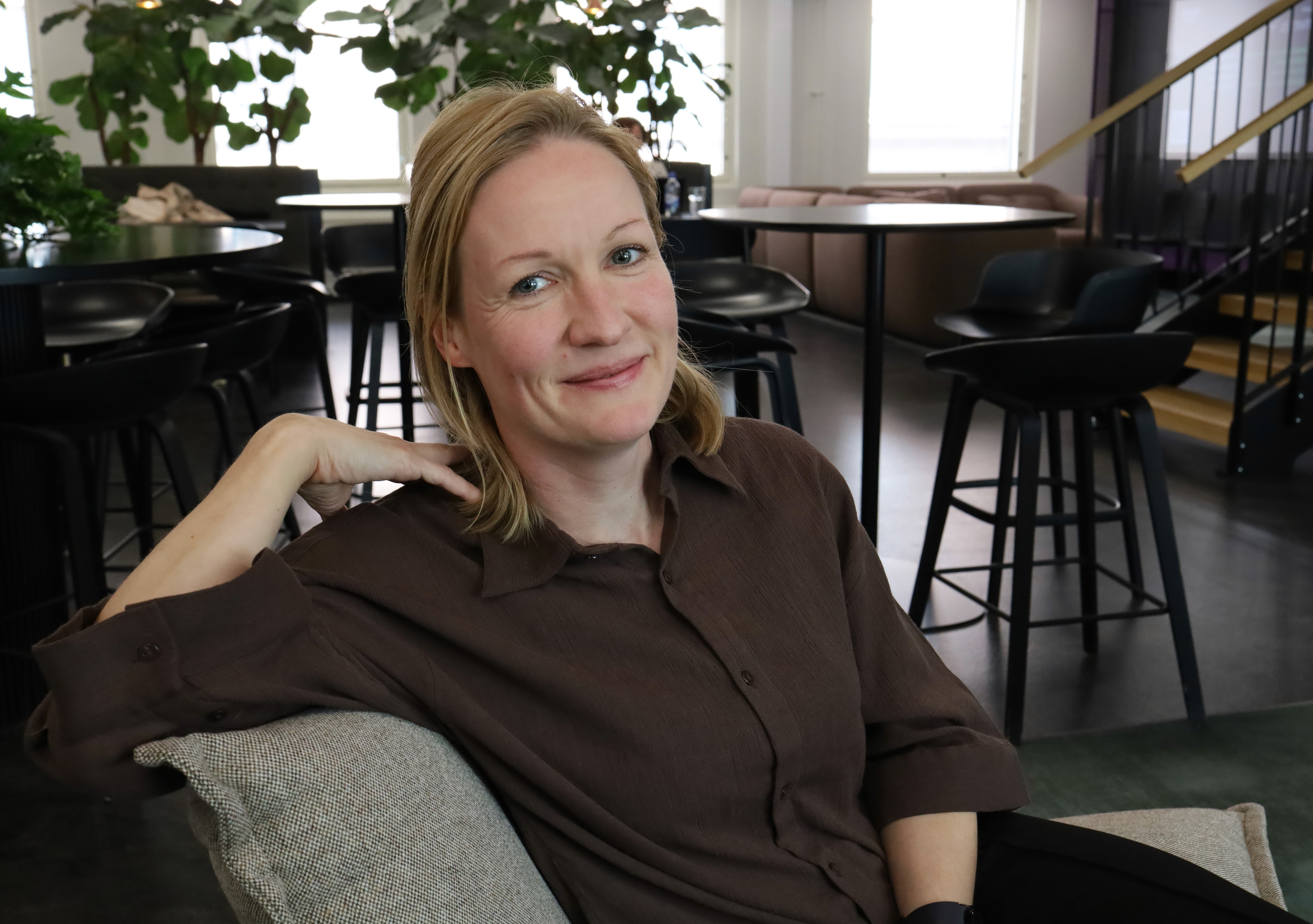
About me
I am Irene Lappalainen, Senior Consultant at Knowit. I was born and raised in Tohmajärvi in North Karelia and even after more than 20 years of living in Helsinki, home still means a lot to me. At work, I am detail-oriented and always pushing to do things well. Outside of work, I am most at home in nature and almost always with my dogs. I compete in agility with my dogs and I will be honest: it takes up most of my free time. I would not have it any other way.
I joined Knowit in 2007 as a SharePoint developer and have been here for nearly 20 years. My role has grown into Senior Consultant over time, but I still do plenty of hands-on work alongside the consulting. That combination of building things and helping customers use them well is what keeps the work interesting.
My Role at Knowit
I work with Microsoft 365, the Microsoft cloud platform that organisations use for collaboration, information management and also increasingly AI-enabled work. Most people encounter it through tools such as Microsoft Teams and SharePoint.
My job is to help our customers get the most out of these tools: advising on how to use them effectively, making sure data is properly secured and doing the actual technical implementation when needed.
A typical project might be a client who wants a new intranet, or an organisation looking to improve the security and governance of how Microsoft Teams is used. Recently, Copilot Studio agents have also become a major part of my work.
What excites me most right now is precisely that shift. I have watched our longest-standing customers evolve from on-premise servers to cloud solutions and now into the AI era. Seeing that full arc and being part of it, is one of the most rewarding parts of this job.
How I Found My Way Into Tech
I graduated from Haaga-Helia University of Applied Sciences with a degree in Business Information Technology. When I finished high school, I had no clear idea what I wanted to do. I chose a technology-oriented field mainly because it seemed to offer strong career opportunities, it was the early 2000s and that felt like the right direction.
But studying felt frustratingly theoretical at first. I remember sitting in class thinking: is this really what IT looks like in practice? Is this what my working days will actually be? I struggled to connect what I was learning to any kind of real job.
Everything changed when I joined the Microsoft Academy program early in my studies. The setup was simple but powerful: two days a week studying SharePoint, the rest of the week doing real customer projects at Knowit. Once I was actually doing things, it clicked. I understood what this field was and I liked it. That experience is also what shapes the advice I give most often to people starting out: Get yourself into a training programme or work placement as early as you can. See what it actually looks like in practice, then you will know whether it is for you or not.
That practical start also meant I was lucky with who I learned from. When I joined Knowit, there was already an experienced architect on the team who knew everything. He never said no when someone needed help. He answered the same questions more than once without making you feel bad for asking. He showed me what good mentorship looks like and it is something I still think about.
Early Career Lessons
My personality has always made me demanding of myself. Early in my career, I pushed hard, I worked more than I logged, trying to show that even as a junior, I could deliver. I thought that was dedication. Looking back, I strongly disagree with that version of myself.
Overworking without acknowledgement distorts the picture for everyone around you. It sets a false standard. It signals that this is what you have to do to be good enough. It is not. Do not prove yourself by giving more than you are recognised for.
There was also a period in the early 2000s when being a woman in a developer role came with invisible scrutiny. Nobody said anything directly, but I could sense that not everyone immediately trusted what I was saying or doing. Once, memorably, I was told I should not wear braids to client meetings because I did not look like a serious enough consultant.
After that, I wore braids to every single client meeting for the next two years. The advice is simple: just be yourself.
Things have genuinely changed since then. I do not experience that kind of behaviour anymore and I believe it is not just me who has changed, the times have changed too.
Working at Knowit - Nearly 20 Years and Counting
The fact that I am still here after almost two decades probably says more than any description could. What I value most is flexibility and the chance to do meaningful work well. Knowit offers both.
A big part of what makes the work rewarding is the customer relationships. Because we have long-term clients, some over a decade, those contacts have started to feel almost like colleagues. You see them evolve. You grow with them. That continuity is genuinely satisfying in a way that short engagements rarely are. I also still do plenty of the hands-on work myself, building and implementing things directly, not just advising. That balance between helping customers find the right solutions and actually implementing them is part of what keeps the role engaging after nearly two decades.
Inside the company, I appreciate that there are opportunities to connect, share knowledge and get involved beyond your own customer projects. There are internal hobby groups, knowledge-sharing guilds and regular afterwork events. You can choose how much you want to participate, and I like that the opportunities are there.
Skills That Have Shaped My Career
Consulting is fundamentally about people. Relationships, communication, chemistry, these are the real foundations of the role. But what I have learned over the years is that the most important thing is not to squeeze yourself into some polished, corporate version of what a consultant should look like. I have never tried to become someone I am not and while there are days I wonder if that is a weakness, most of the time I am glad for it.
On the technical side, there is one skill that is now non-negotiable in my field: AI. Not just knowing how to use AI tools yourself, though that matters too, but genuinely understanding the AI features within the Microsoft 365 ecosystem. Being able to help customers adopt them, and navigate the security and data considerations that come with that. You cannot be a credible Microsoft 365 consultant today without it.
Keeping Up With Change
The speed of change in tech is something everyone talks about in 2026 and for good reason. A few years ago, the Microsoft 365 platform had reached a kind of relative stability. Updates felt incremental. I remember starting to feel like I was doing the same things on repeat.
Then AI arrived and everything became new again. I did not know everything anymore. I had to explore, relearn, rethink. That discomfort is actually what keeps this field interesting, there is always something to figure out. Clients became increasingly knowledgeable too, which raised the bar. They come to meetings informed and expect you to be one step ahead. Staying on top of it requires genuine discipline. You cannot afford to stand still. Keeping up is part of the job.
My most practical learning habit is blocking Monday mornings in my calendar to review what has changed, what is new and what I need to know before the week starts. It sounds simple but it works. The other thing I genuinely recommend, especially for anyone in the Microsoft ecosystem, are the Microsoft 365 Community Calls. They cover everything that matters, they are run by people who love what they do and they are open to anyone. Look up the Sharing is Caring calls with Vesa Juvonen: knowledgeable, warm and a good example of what open community knowledge-sharing can look like.
My Take on AI
Working with customers every day gives me a particular view of how AI adoption is evolving. People now have a much better understanding of where AI adds value and where it doesn’t. There’s more awareness of both its strengths and its limitations than there was a year ago.
What still needs more attention is information classification. People need to understand what kind of information they are working with – what is public, internal, confidential or otherwise sensitive – and what that means when using AI tools. In Finland, organisations operate within EU data protection and governance requirements, but policies alone are not enough. End users also need to understand how information should be classified and handled in practice. That education is still very much ongoing.
The tool I rely on most is Microsoft 365 Copilot, which can securely access organisational and project data. That security piece is what makes it genuinely useful rather than just a generic assistant.
Role Models and Representation
When I started, things looked very different. I do not remember exactly how many women were in my programme at Haaga-Helia, but I know that somewhere close to half dropped out before finishing. "This is not for me" was the common conclusion and I came close to it myself.
What saved me was getting practical experience early. Actually being in a workplace, seeing what the work really was and realising that tech is not just coding. It is consulting, project management, UI design, so much more than the theoretical version shown in school. I genuinely believe that if more students could experience the real range of roles in tech before deciding to leave, more would stay.
Visibility plays a part in that too. There is still a gap between what tech looks like from the outside and what it is actually like to work in it. When women can see other women in a range of roles, including leadership, the field feels more accessible. At Knowit in Finland, women make up over 70% of our leadership team, and I think that kind of representation matters. I really hope more and more women read these blogs. This is one way of showing the variety of people and roles in our industry.
And representation is only part of it. People also need an environment where they can focus on their work, develop their expertise and be themselves. In my own experience at Knowit, I haven't felt that my gender defines how I am treated or what opportunities I have. To me, that is what an inclusive workplace should ultimately feel like.
Well-Being and Life Outside Work
When I am not working, I am outside. I walk Helsinki's Central Park with my dogs. In summer, I work remotely from my cottage in Eastern Finland and spend every free moment outdoors. The moment I cannot get outside in the evening, I notice it in my wellbeing the next day.
I also try to keep screens away after work ends. I have work email on my phone, but notifications are off. That one change makes a bigger difference than people expect. You do not have to delete the app. Just remove the notifications. If something is genuinely urgent, you will find out, but most things are not.
Final Thoughts
If I had to distill everything into something worth passing on, it would be this: do not try to be perfect at everything. Good is enough. Okay is often enough. It is a competitive field and the pressure to be flawless is real especially for women, who are often already holding themselves to a higher standard than anyone around them.
I was told this advice years ago and I am still working on living by it. But every time I manage it, things go better for me and for the people around me.
"Take it easy. Or, better yet: work remotely from your summer cottage in winter. It doesn't get more authentically Finnish than that."
Irene stopped trying to prove herself through overwork and started trusting that good is enough. If that's a shift you're working on too, there's a community for that. You belong in tech. Every story shared opens a door. Join us. 💜

Aug 17, 2026
Role Model Blog: Irene Lappalainen, Knowit
"You don't have to be perfect at everything in order to still be very good at your job. Shift that mindset, it's one of the most important things you can do for yourself."
About me
I am Irene Lappalainen, Senior Consultant at Knowit. I was born and raised in Tohmajärvi in North Karelia and even after more than 20 years of living in Helsinki, home still means a lot to me. At work, I am detail-oriented and always pushing to do things well. Outside of work, I am most at home in nature and almost always with my dogs. I compete in agility with my dogs and I will be honest: it takes up most of my free time. I would not have it any other way.
I joined Knowit in 2007 as a SharePoint developer and have been here for nearly 20 years. My role has grown into Senior Consultant over time, but I still do plenty of hands-on work alongside the consulting. That combination of building things and helping customers use them well is what keeps the work interesting.
My Role at Knowit
I work with Microsoft 365, the Microsoft cloud platform that organisations use for collaboration, information management and also increasingly AI-enabled work. Most people encounter it through tools such as Microsoft Teams and SharePoint.
My job is to help our customers get the most out of these tools: advising on how to use them effectively, making sure data is properly secured and doing the actual technical implementation when needed.
A typical project might be a client who wants a new intranet, or an organisation looking to improve the security and governance of how Microsoft Teams is used. Recently, Copilot Studio agents have also become a major part of my work.
What excites me most right now is precisely that shift. I have watched our longest-standing customers evolve from on-premise servers to cloud solutions and now into the AI era. Seeing that full arc and being part of it, is one of the most rewarding parts of this job.
How I Found My Way Into Tech
I graduated from Haaga-Helia University of Applied Sciences with a degree in Business Information Technology. When I finished high school, I had no clear idea what I wanted to do. I chose a technology-oriented field mainly because it seemed to offer strong career opportunities, it was the early 2000s and that felt like the right direction.
But studying felt frustratingly theoretical at first. I remember sitting in class thinking: is this really what IT looks like in practice? Is this what my working days will actually be? I struggled to connect what I was learning to any kind of real job.
Everything changed when I joined the Microsoft Academy program early in my studies. The setup was simple but powerful: two days a week studying SharePoint, the rest of the week doing real customer projects at Knowit. Once I was actually doing things, it clicked. I understood what this field was and I liked it. That experience is also what shapes the advice I give most often to people starting out: Get yourself into a training programme or work placement as early as you can. See what it actually looks like in practice, then you will know whether it is for you or not.
That practical start also meant I was lucky with who I learned from. When I joined Knowit, there was already an experienced architect on the team who knew everything. He never said no when someone needed help. He answered the same questions more than once without making you feel bad for asking. He showed me what good mentorship looks like and it is something I still think about.
Early Career Lessons
My personality has always made me demanding of myself. Early in my career, I pushed hard, I worked more than I logged, trying to show that even as a junior, I could deliver. I thought that was dedication. Looking back, I strongly disagree with that version of myself.
Overworking without acknowledgement distorts the picture for everyone around you. It sets a false standard. It signals that this is what you have to do to be good enough. It is not. Do not prove yourself by giving more than you are recognised for.
There was also a period in the early 2000s when being a woman in a developer role came with invisible scrutiny. Nobody said anything directly, but I could sense that not everyone immediately trusted what I was saying or doing. Once, memorably, I was told I should not wear braids to client meetings because I did not look like a serious enough consultant.
After that, I wore braids to every single client meeting for the next two years. The advice is simple: just be yourself.
Things have genuinely changed since then. I do not experience that kind of behaviour anymore and I believe it is not just me who has changed, the times have changed too.
Working at Knowit - Nearly 20 Years and Counting
The fact that I am still here after almost two decades probably says more than any description could. What I value most is flexibility and the chance to do meaningful work well. Knowit offers both.
A big part of what makes the work rewarding is the customer relationships. Because we have long-term clients, some over a decade, those contacts have started to feel almost like colleagues. You see them evolve. You grow with them. That continuity is genuinely satisfying in a way that short engagements rarely are. I also still do plenty of the hands-on work myself, building and implementing things directly, not just advising. That balance between helping customers find the right solutions and actually implementing them is part of what keeps the role engaging after nearly two decades.
Inside the company, I appreciate that there are opportunities to connect, share knowledge and get involved beyond your own customer projects. There are internal hobby groups, knowledge-sharing guilds and regular afterwork events. You can choose how much you want to participate, and I like that the opportunities are there.
Skills That Have Shaped My Career
Consulting is fundamentally about people. Relationships, communication, chemistry, these are the real foundations of the role. But what I have learned over the years is that the most important thing is not to squeeze yourself into some polished, corporate version of what a consultant should look like. I have never tried to become someone I am not and while there are days I wonder if that is a weakness, most of the time I am glad for it.
On the technical side, there is one skill that is now non-negotiable in my field: AI. Not just knowing how to use AI tools yourself, though that matters too, but genuinely understanding the AI features within the Microsoft 365 ecosystem. Being able to help customers adopt them, and navigate the security and data considerations that come with that. You cannot be a credible Microsoft 365 consultant today without it.
Keeping Up With Change
The speed of change in tech is something everyone talks about in 2026 and for good reason. A few years ago, the Microsoft 365 platform had reached a kind of relative stability. Updates felt incremental. I remember starting to feel like I was doing the same things on repeat.
Then AI arrived and everything became new again. I did not know everything anymore. I had to explore, relearn, rethink. That discomfort is actually what keeps this field interesting, there is always something to figure out. Clients became increasingly knowledgeable too, which raised the bar. They come to meetings informed and expect you to be one step ahead. Staying on top of it requires genuine discipline. You cannot afford to stand still. Keeping up is part of the job.
My most practical learning habit is blocking Monday mornings in my calendar to review what has changed, what is new and what I need to know before the week starts. It sounds simple but it works. The other thing I genuinely recommend, especially for anyone in the Microsoft ecosystem, are the Microsoft 365 Community Calls. They cover everything that matters, they are run by people who love what they do and they are open to anyone. Look up the Sharing is Caring calls with Vesa Juvonen: knowledgeable, warm and a good example of what open community knowledge-sharing can look like.
My Take on AI
Working with customers every day gives me a particular view of how AI adoption is evolving. People now have a much better understanding of where AI adds value and where it doesn’t. There’s more awareness of both its strengths and its limitations than there was a year ago.
What still needs more attention is information classification. People need to understand what kind of information they are working with – what is public, internal, confidential or otherwise sensitive – and what that means when using AI tools. In Finland, organisations operate within EU data protection and governance requirements, but policies alone are not enough. End users also need to understand how information should be classified and handled in practice. That education is still very much ongoing.
The tool I rely on most is Microsoft 365 Copilot, which can securely access organisational and project data. That security piece is what makes it genuinely useful rather than just a generic assistant.
Role Models and Representation
When I started, things looked very different. I do not remember exactly how many women were in my programme at Haaga-Helia, but I know that somewhere close to half dropped out before finishing. "This is not for me" was the common conclusion and I came close to it myself.
What saved me was getting practical experience early. Actually being in a workplace, seeing what the work really was and realising that tech is not just coding. It is consulting, project management, UI design, so much more than the theoretical version shown in school. I genuinely believe that if more students could experience the real range of roles in tech before deciding to leave, more would stay.
Visibility plays a part in that too. There is still a gap between what tech looks like from the outside and what it is actually like to work in it. When women can see other women in a range of roles, including leadership, the field feels more accessible. At Knowit in Finland, women make up over 70% of our leadership team, and I think that kind of representation matters. I really hope more and more women read these blogs. This is one way of showing the variety of people and roles in our industry.
And representation is only part of it. People also need an environment where they can focus on their work, develop their expertise and be themselves. In my own experience at Knowit, I haven't felt that my gender defines how I am treated or what opportunities I have. To me, that is what an inclusive workplace should ultimately feel like.
Well-Being and Life Outside Work
When I am not working, I am outside. I walk Helsinki's Central Park with my dogs. In summer, I work remotely from my cottage in Eastern Finland and spend every free moment outdoors. The moment I cannot get outside in the evening, I notice it in my wellbeing the next day.
I also try to keep screens away after work ends. I have work email on my phone, but notifications are off. That one change makes a bigger difference than people expect. You do not have to delete the app. Just remove the notifications. If something is genuinely urgent, you will find out, but most things are not.
Final Thoughts
If I had to distill everything into something worth passing on, it would be this: do not try to be perfect at everything. Good is enough. Okay is often enough. It is a competitive field and the pressure to be flawless is real especially for women, who are often already holding themselves to a higher standard than anyone around them.
I was told this advice years ago and I am still working on living by it. But every time I manage it, things go better for me and for the people around me.
"Take it easy. Or, better yet: work remotely from your summer cottage in winter. It doesn't get more authentically Finnish than that."
Irene stopped trying to prove herself through overwork and started trusting that good is enough. If that's a shift you're working on too, there's a community for that. You belong in tech. Every story shared opens a door. Join us. 💜
Aug 17, 2026
Role Model Blog: Irene Lappalainen, Knowit
"You don't have to be perfect at everything in order to still be very good at your job. Shift that mindset, it's one of the most important things you can do for yourself."
About me
I am Irene Lappalainen, Senior Consultant at Knowit. I was born and raised in Tohmajärvi in North Karelia and even after more than 20 years of living in Helsinki, home still means a lot to me. At work, I am detail-oriented and always pushing to do things well. Outside of work, I am most at home in nature and almost always with my dogs. I compete in agility with my dogs and I will be honest: it takes up most of my free time. I would not have it any other way.
I joined Knowit in 2007 as a SharePoint developer and have been here for nearly 20 years. My role has grown into Senior Consultant over time, but I still do plenty of hands-on work alongside the consulting. That combination of building things and helping customers use them well is what keeps the work interesting.
My Role at Knowit
I work with Microsoft 365, the Microsoft cloud platform that organisations use for collaboration, information management and also increasingly AI-enabled work. Most people encounter it through tools such as Microsoft Teams and SharePoint.
My job is to help our customers get the most out of these tools: advising on how to use them effectively, making sure data is properly secured and doing the actual technical implementation when needed.
A typical project might be a client who wants a new intranet, or an organisation looking to improve the security and governance of how Microsoft Teams is used. Recently, Copilot Studio agents have also become a major part of my work.
What excites me most right now is precisely that shift. I have watched our longest-standing customers evolve from on-premise servers to cloud solutions and now into the AI era. Seeing that full arc and being part of it, is one of the most rewarding parts of this job.
How I Found My Way Into Tech
I graduated from Haaga-Helia University of Applied Sciences with a degree in Business Information Technology. When I finished high school, I had no clear idea what I wanted to do. I chose a technology-oriented field mainly because it seemed to offer strong career opportunities, it was the early 2000s and that felt like the right direction.
But studying felt frustratingly theoretical at first. I remember sitting in class thinking: is this really what IT looks like in practice? Is this what my working days will actually be? I struggled to connect what I was learning to any kind of real job.
Everything changed when I joined the Microsoft Academy program early in my studies. The setup was simple but powerful: two days a week studying SharePoint, the rest of the week doing real customer projects at Knowit. Once I was actually doing things, it clicked. I understood what this field was and I liked it. That experience is also what shapes the advice I give most often to people starting out: Get yourself into a training programme or work placement as early as you can. See what it actually looks like in practice, then you will know whether it is for you or not.
That practical start also meant I was lucky with who I learned from. When I joined Knowit, there was already an experienced architect on the team who knew everything. He never said no when someone needed help. He answered the same questions more than once without making you feel bad for asking. He showed me what good mentorship looks like and it is something I still think about.
Early Career Lessons
My personality has always made me demanding of myself. Early in my career, I pushed hard, I worked more than I logged, trying to show that even as a junior, I could deliver. I thought that was dedication. Looking back, I strongly disagree with that version of myself.
Overworking without acknowledgement distorts the picture for everyone around you. It sets a false standard. It signals that this is what you have to do to be good enough. It is not. Do not prove yourself by giving more than you are recognised for.
There was also a period in the early 2000s when being a woman in a developer role came with invisible scrutiny. Nobody said anything directly, but I could sense that not everyone immediately trusted what I was saying or doing. Once, memorably, I was told I should not wear braids to client meetings because I did not look like a serious enough consultant.
After that, I wore braids to every single client meeting for the next two years. The advice is simple: just be yourself.
Things have genuinely changed since then. I do not experience that kind of behaviour anymore and I believe it is not just me who has changed, the times have changed too.
Working at Knowit - Nearly 20 Years and Counting
The fact that I am still here after almost two decades probably says more than any description could. What I value most is flexibility and the chance to do meaningful work well. Knowit offers both.
A big part of what makes the work rewarding is the customer relationships. Because we have long-term clients, some over a decade, those contacts have started to feel almost like colleagues. You see them evolve. You grow with them. That continuity is genuinely satisfying in a way that short engagements rarely are. I also still do plenty of the hands-on work myself, building and implementing things directly, not just advising. That balance between helping customers find the right solutions and actually implementing them is part of what keeps the role engaging after nearly two decades.
Inside the company, I appreciate that there are opportunities to connect, share knowledge and get involved beyond your own customer projects. There are internal hobby groups, knowledge-sharing guilds and regular afterwork events. You can choose how much you want to participate, and I like that the opportunities are there.
Skills That Have Shaped My Career
Consulting is fundamentally about people. Relationships, communication, chemistry, these are the real foundations of the role. But what I have learned over the years is that the most important thing is not to squeeze yourself into some polished, corporate version of what a consultant should look like. I have never tried to become someone I am not and while there are days I wonder if that is a weakness, most of the time I am glad for it.
On the technical side, there is one skill that is now non-negotiable in my field: AI. Not just knowing how to use AI tools yourself, though that matters too, but genuinely understanding the AI features within the Microsoft 365 ecosystem. Being able to help customers adopt them, and navigate the security and data considerations that come with that. You cannot be a credible Microsoft 365 consultant today without it.
Keeping Up With Change
The speed of change in tech is something everyone talks about in 2026 and for good reason. A few years ago, the Microsoft 365 platform had reached a kind of relative stability. Updates felt incremental. I remember starting to feel like I was doing the same things on repeat.
Then AI arrived and everything became new again. I did not know everything anymore. I had to explore, relearn, rethink. That discomfort is actually what keeps this field interesting, there is always something to figure out. Clients became increasingly knowledgeable too, which raised the bar. They come to meetings informed and expect you to be one step ahead. Staying on top of it requires genuine discipline. You cannot afford to stand still. Keeping up is part of the job.
My most practical learning habit is blocking Monday mornings in my calendar to review what has changed, what is new and what I need to know before the week starts. It sounds simple but it works. The other thing I genuinely recommend, especially for anyone in the Microsoft ecosystem, are the Microsoft 365 Community Calls. They cover everything that matters, they are run by people who love what they do and they are open to anyone. Look up the Sharing is Caring calls with Vesa Juvonen: knowledgeable, warm and a good example of what open community knowledge-sharing can look like.
My Take on AI
Working with customers every day gives me a particular view of how AI adoption is evolving. People now have a much better understanding of where AI adds value and where it doesn’t. There’s more awareness of both its strengths and its limitations than there was a year ago.
What still needs more attention is information classification. People need to understand what kind of information they are working with – what is public, internal, confidential or otherwise sensitive – and what that means when using AI tools. In Finland, organisations operate within EU data protection and governance requirements, but policies alone are not enough. End users also need to understand how information should be classified and handled in practice. That education is still very much ongoing.
The tool I rely on most is Microsoft 365 Copilot, which can securely access organisational and project data. That security piece is what makes it genuinely useful rather than just a generic assistant.
Role Models and Representation
When I started, things looked very different. I do not remember exactly how many women were in my programme at Haaga-Helia, but I know that somewhere close to half dropped out before finishing. "This is not for me" was the common conclusion and I came close to it myself.
What saved me was getting practical experience early. Actually being in a workplace, seeing what the work really was and realising that tech is not just coding. It is consulting, project management, UI design, so much more than the theoretical version shown in school. I genuinely believe that if more students could experience the real range of roles in tech before deciding to leave, more would stay.
Visibility plays a part in that too. There is still a gap between what tech looks like from the outside and what it is actually like to work in it. When women can see other women in a range of roles, including leadership, the field feels more accessible. At Knowit in Finland, women make up over 70% of our leadership team, and I think that kind of representation matters. I really hope more and more women read these blogs. This is one way of showing the variety of people and roles in our industry.
And representation is only part of it. People also need an environment where they can focus on their work, develop their expertise and be themselves. In my own experience at Knowit, I haven't felt that my gender defines how I am treated or what opportunities I have. To me, that is what an inclusive workplace should ultimately feel like.
Well-Being and Life Outside Work
When I am not working, I am outside. I walk Helsinki's Central Park with my dogs. In summer, I work remotely from my cottage in Eastern Finland and spend every free moment outdoors. The moment I cannot get outside in the evening, I notice it in my wellbeing the next day.
I also try to keep screens away after work ends. I have work email on my phone, but notifications are off. That one change makes a bigger difference than people expect. You do not have to delete the app. Just remove the notifications. If something is genuinely urgent, you will find out, but most things are not.
Final Thoughts
If I had to distill everything into something worth passing on, it would be this: do not try to be perfect at everything. Good is enough. Okay is often enough. It is a competitive field and the pressure to be flawless is real especially for women, who are often already holding themselves to a higher standard than anyone around them.
I was told this advice years ago and I am still working on living by it. But every time I manage it, things go better for me and for the people around me.
"Take it easy. Or, better yet: work remotely from your summer cottage in winter. It doesn't get more authentically Finnish than that."
Irene stopped trying to prove herself through overwork and started trusting that good is enough. If that's a shift you're working on too, there's a community for that. You belong in tech. Every story shared opens a door. Join us. 💜